Water used to be a need.
Then someone gave it a glass bottle, a mineral profile, and an opinion.
There is a particular moment in a restaurant when a person becomes more complicated than thirst.
The server asks, "Still or sparkling?" It is a simple question, allegedly. Two paths. No moral injury required. And yet the table changes. Someone says still with the exhausted restraint of a hostage negotiator. Someone says sparkling before anyone else can speak, because carbonation has become their civic identity. Someone asks what kind, and now the evening has acquired a geology department.
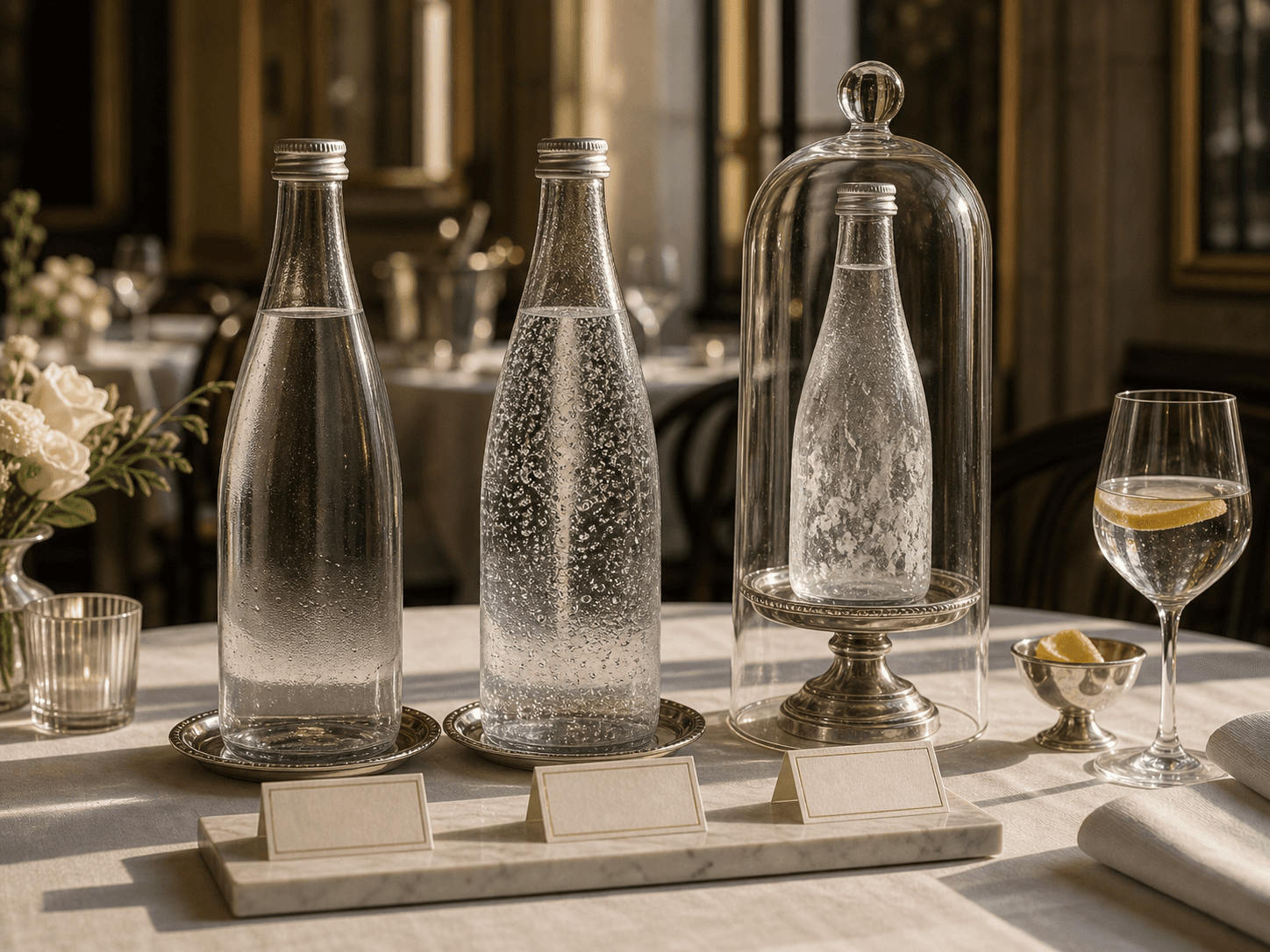
The water arrives in a bottle with shoulders.
This is how the trouble begins.
Even Water Has a Hierarchy Now
The achievement of modern affluence is not that we have more choices. It is that we have managed to make even the neutral choices socially revealing.
Water was supposed to be beneath performance. It was the baseline. The thing you drank before having an opinion. But the wellness economy looked at water and saw potential. Source. Mineral content. pH. terroir, if everyone is feeling especially French and no one has been brave enough to stop the conversation.
Now water can be local, imported, volcanic, glacial, alkaline, structured, gently sparkling, aggressively sparkling, sodium-rich, magnesium-forward, low-mineral, high-mineral, naturally carbonated, artificially carbonated, or simply tap water served in a carafe by a restaurant confident enough not to apologize.
Hydration has become a social graph.
The Mineral Profile as Personality Test
Mineral water does have a real definition. In the United States, the FDA distinguishes mineral water by mineral and trace element content that comes from the underground source rather than being added later. The European Union treats natural mineral water with similar seriousness, maintaining official recognition systems and rules around composition and labeling.
This is where the story becomes genuinely interesting. Water is not always just water. The dissolved minerals vary by source: calcium, magnesium, sodium, bicarbonate, sulfate. Some waters taste soft and almost absent. Some taste like they have been filtered through a small argument with a mountain. Some arrive with enough sodium to make the waiter seem complicit.
Magnesium, for example, is a real nutrient, involved in hundreds of enzymatic reactions in the body. The NIH notes that tap, mineral, and bottled waters can contribute magnesium, but the amount varies dramatically by source and brand.
So yes, the mineral content can matter. No, the bottle is not your endocrinologist.
Still People
Still water people believe they are above theater.
This is their theater.
Still water is restraint in liquid form. It suggests seriousness, clarity, no nonsense, no bubbles performing in the glass like interns at a product launch. A still water person wants hydration without spectacle. They do not want their esophagus lightly applauded. They do not need fizz to feel alive, and they would like you to know that.
In a good restaurant, still water can feel almost monastic. The bottle is opened. The glass is filled. The surface remains calm, which allows everyone to pretend the table has not already begun judging itself.
Still water says: I came here to eat, not be entertained by carbon dioxide.
Sparkling People
Sparkling water people are more honest.
They want punctuation. They want a little event. They believe the mouth deserves weather. They are willing to admit that hydration, while necessary, can be improved by drama.
Sparkling water is the dinner guest who knows one anecdote too many but, annoyingly, improves the room. It cuts richness. It wakes the palate. It gives a glass something to do. In the right context, it is not pretentious. It is architecture.
The problem is not sparkling water.
The problem is the person who says, "I only drink sparkling," and then waits for culture to reorganize itself around the statement.
The Table-Side Water Negotiation
The first bottle is never just a bottle. It is a collective decision disguised as service.
If one person wants sparkling and another wants still, the table enters diplomacy. "We can do both," someone says, with the weary generosity of a person funding a border dispute. The server returns with two bottles, and now the table has factions.
Some people will drink from either bottle. These are the flexible citizens. Others will protect their glass from the wrong water as if cross-contamination would compromise a bloodline. Someone will ask which is which, though the bubbles are visible. Someone will pour sparkling into a still person's glass and apologize with the terror normally reserved for red wine on cream linen.
Civilization is thin. Sometimes it is one wrong pour.
The Wellness Bottle
Then there is the wellness bottle.
This is not restaurant water. This is water purchased with intention. It has a shape. It has a philosophy. It may come in glass, which immediately makes the person carrying it look as if they are transporting a fragile moral advantage.
Wellness water often speaks the language of correction. Electrolytes. Alkalinity. Trace minerals. Mountain source. Deep aquifer. It does not say, "Drink me because you are thirsty." It says, "Drink me because your ordinary fluids have failed to become a strategy."
Again, this is not entirely fake. Hydration matters. Electrolytes matter in certain contexts: heat, endurance exercise, illness, heavy sweating, long flights, terrible decisions involving saunas. But the leap from usefulness to identity can happen very quickly.
One minute you are replacing sodium after a run. The next you are explaining bicarbonate levels to someone who only asked if you wanted coffee.
The Taste of Place
The best defense of mineral water is that it can taste like place.
This is the part one must admit, even while making fun of the person who owns a preferred water. A spring, aquifer, or geological source can create a distinct mineral composition, and composition affects taste. Some waters are round. Some are sharp. Some have a faint bitter edge. Some feel almost silky. Some taste like the inside of a very clean stone.
There is pleasure in noticing this. There is even elegance in serving water that suits the meal. A mineral-heavy sparkling water with rich food. A softer still water with something delicate. A cold glass of tap water in the kitchen at midnight, which remains undefeated by all marketing departments.
Taste becomes unbearable only when it forgets to be grateful.
How to Drink Water Without Becoming a Problem
Have preferences. Preferences are allowed. Preferences are one of the ways a person becomes textured rather than merely available.
But keep them portable. If the restaurant has still, drink still. If the table wants sparkling, consider sharing the bubbles unless the bubbles personally wronged your family. If someone serves tap water, do not behave as if you have been asked to drink from a decorative pond.
Learn the difference between discernment and maintenance requirements. A discerning person notices quality. A high-maintenance person turns quality into weather everyone else must dress for.
The goal is not to have no standards. The goal is to keep your standards from needing their own chair.
The Final Pour
Water becoming status is absurd.
It is also, unfortunately, understandable. The more optimized life becomes, the more even basic needs acquire ceremony. We do not only want water. We want water that suggests care, place, minerals, precision, glass, calm, wellness, and the possibility that the better version of us is one bottle away from behaving more cleanly.
This is ridiculous.
It is also why, if someone offers me the sparkling one in the beautiful bottle, I will probably say yes.
Even water has become a mirror.
Some of us simply prefer the mirror with bubbles.
Sources
This essay draws on official guidance and nutrition references for bottled water definitions, natural mineral water rules, and mineral variation by source. It is cultural commentary, not medical advice.