A house shoe is not a shoe.
It is a border crossing with upholstery.
The first mistake is thinking the house shoe is about feet.
It is not. Feet are only the site of enforcement. The house shoe is about civilization, boundaries, hygiene, softness, class, hospitality, and the small domestic fantasy that one might become a better person if one simply stopped bringing the street into the living room.
Outside shoes are blunt instruments. They know sidewalks, elevators, airports, parking garages, suspicious puddles, and the thin carpet of public obligation. They carry the world on their soles and, because they are rude, pretend not to.
The house shoe intervenes. It says: no further.
Papuci and the Seriousness of Comfort
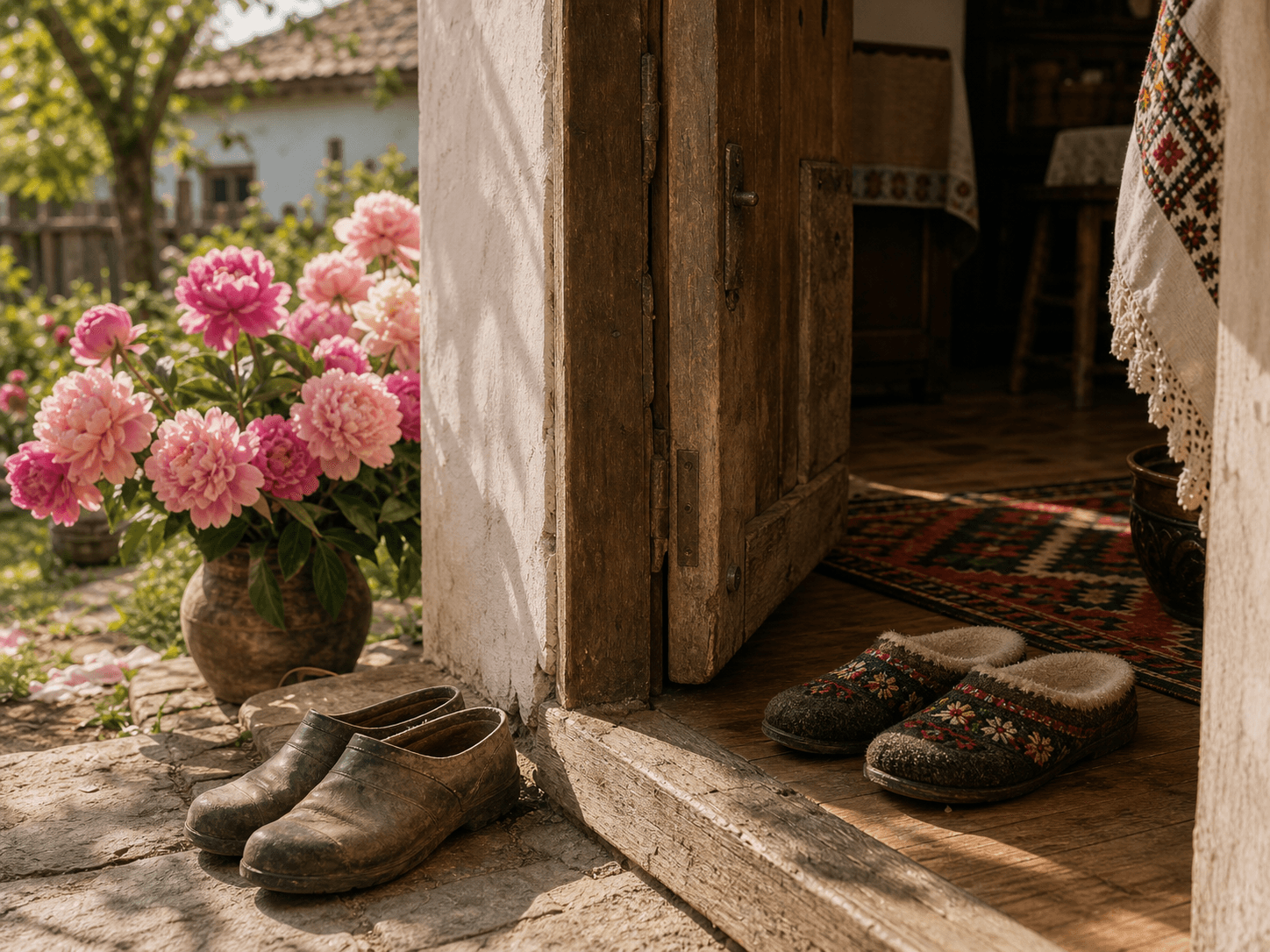
In Romanian, papuci are slippers, light shoes, the footwear of inside. The singular is papuc, but the plural feels more natural because the object is almost always a pair and, spiritually, an instruction.
Romanian has the right level of seriousness about this. A house without papuci is not merely under-accessorized. It is morally exposed. The floor is there, yes, but the floor is not your friend. The floor is cold, indifferent, possibly dusty, and absolutely waiting to make a larger point about circulation.
If you have ever loved a Romanian, you may have encountered this doctrine not as style advice, but as care. "Put on your papuci." Not because you look bad. Not because anyone is trying to control you. Because your comfort has become someone else's jurisdiction, and they intend to govern it beautifully.
It is rather cute, in the way only firm domestic law can be cute.
The Threshold Is the Point
The house shoe begins at the threshold. That is where the symbolism lives.
A threshold is not just architecture. It is a ritual device. One version of the self stops there. Another begins. Coat off. Keys down. Phone face-down if one has any remaining ambition toward dignity. Outdoor shoes removed. House shoes on.
The exchange is subtle but profound. A loafer says, "I am prepared to be observed." A house shoe says, "Observation has been suspended until further notice." A sneaker says, "I may need to run." A slipper says, "From whom? We have soup."
This is why the ritual feels luxurious even when the slippers are humble. Luxury is not always cost. Sometimes it is the existence of an intermediate state between public armor and total collapse.
The Rich Do Not Merely Remove Shoes
The wealthy have a talent for turning necessity into atmosphere.
Everyone needs to avoid tracking filth through the house. But affluence does not say, "Please don't ruin the floor." Affluence says, "We have prepared a softer identity for you." There may be a bench. There may be a tray. There may be guest slippers in disciplined pairs, arranged with the faint menace of a hotel spa.
This is where the class signal emerges. The house shoe implies that the home is not just where life happens. It is a controlled interior climate. The world has been filtered. Texture has been chosen. Hardness has been negotiated down.
To own good house shoes is to suggest that even your private fatigue deserves better materials.
Softness as Authority
We tend to think authority is hard: marble, steel, polished shoes, sharp collars, a watch heavy enough to imply arbitration. But domestic authority is often soft. A robe. A towel. A slipper. The objects that win inside the home do not command by height or shine. They command by being impossible to give up once understood.
The first time you wear proper house shoes on a cold morning, something embarrassing happens. You become convinced you have been mistreated by history. Why was this not provided earlier? Who allowed your feet to improvise for so long? What other comforts have been withheld under the false name of adulthood?
This is the danger of refinement. It turns ordinary survival into a memory of deprivation.
Before the house shoe, you had floors. After the house shoe, you have standards.
Guest Slippers and the Politics of Being Received
Guest slippers are where the ritual becomes diplomatic.
To offer someone house shoes is to say: you are welcome here, but the house has laws. It is hospitality with a border policy. A truly elegant host does not make the guest feel corrected. They make compliance feel like privilege.
This is not easy. Too casual and the guest feels they have wandered into a laundry room. Too formal and everyone is suddenly at a wellness retreat being punished for having arrived in ankles. The ideal guest slipper sits between monastery and boutique hotel. It should be clean, quiet, and mildly flattering to the foot without suggesting surveillance.
The best version says: we thought of your comfort before you had to announce having a body.
Why Barefoot Is Not the Same
Barefoot has its own romance. It implies ease, summer, childhood, a kitchen warm enough to forgive you. But barefoot is also vulnerable. It is intimate before the room has consented. It exposes too much personality too quickly.
Socks are better, but only slightly. Socks are transitional. Socks say the outfit has ended and no replacement government has yet formed. They are acceptable during illness, travel recovery, and certain honest evenings, but they do not carry the authority of a house shoe.
A slipper completes the sentence.
It lets the body soften without abandoning form. It is comfort with a silhouette. Ease with a sole.
The House Shoe We Secretly Want
Of course, the whole thing is ridiculous.
A shoe for the house. A costume change for entering your own apartment. A small private footwear regime. One can easily mock the person who owns seasonal slippers, travel slippers, guest slippers, balcony slippers, and the more serious winter papuci that imply a nation preparing for hardship.
And yet.
The desire is real. We want the entryway bench. We want the warm floor. We want the beautiful little pair waiting where the public day ends. We want domestic life to contain ritual because ritual makes ordinary comfort feel earned, chosen, protected.
This is the Highest Fade problem in miniature: we can see the absurdity of refinement and still want the better version of the object.
How Not to Become Insufferable About It
Buy one good pair. Not seven. Not a collection. A collection of house shoes suggests that comfort has become management.
Choose material honestly. Wool if the floor is cold. Leather if you are privately dramatic. Velvet if you are in danger of becoming a person who says "drawing room" without irony. Rubber soles only if there is a balcony, a garden, or a life that occasionally touches weather.
Do not explain them too much. The moment you begin describing arch support at dinner, the papuci have won and you have been placed under their authority.
And if someone tells you to put them on because the floor is cold, receive the instruction with gratitude. It is not control. It is tenderness wearing a sole.
The outside world has shoes.
The inside world has papuci.
A civilized life knows the difference.
The house shoe is not about hiding from the world.
It is about refusing to let the world keep its shoes on indoors.
Sources
This essay draws on Romanian dictionary definitions of papuc and the broader cultural use of house slippers as domestic indoor footwear.