I. The Face After the Party
The look is easy to recognize and hard to defend.
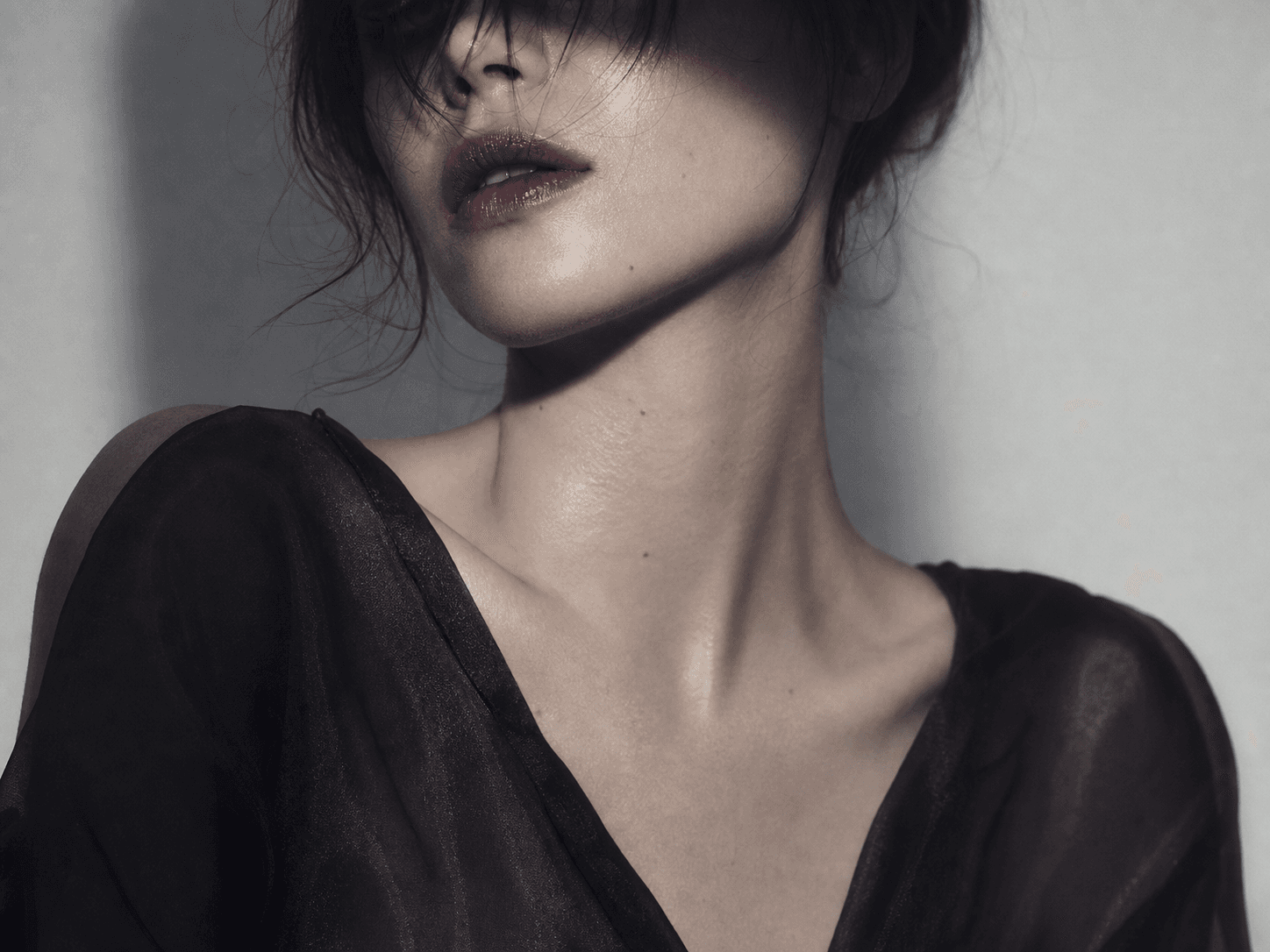
Skin slightly too pale. Eyes darkened as if sleep had been negotiated and lost. Lips bitten into color rather than painted. Hair clean, but not innocent. A face that looks like it has just left a hotel room where something expensive, private, and morally unclear happened.
It is not sickness exactly. It is not collapse. It is the suggestion of having been altered. By a night. By a person. By beauty itself, administered in a dose just shy of fatal.
Fashion keeps returning to this face because it signals what fresh-faced health cannot: experience. The radiant person has slept. The slightly poisoned person has lived.
II. Damage, But Curated
The obvious historical shadow is heroin chic, the 1990s aesthetic of pale skin, dark under-eyes, thin bodies, and expensive disarray. It was controversial then and remains dangerous now, not because fashion discovered fragility, but because it learned how photogenic fragility could be.
But the current version is less literal, more lacquered. It does not necessarily want to look destroyed. It wants to look touched by consequence.
This matters. There is a difference between glamorizing harm and studying why culture keeps making evidence of intensity look seductive. The poisoned face is not asking to be rescued. It is asking to be decoded.
It says: I am not available in the normal way. I have a private weather system. I may answer your text in three days, but when I do, you will remember the punctuation.
III. The Smudged Eye as Evidence
A clean eye is decoration. A smudged eye is narrative.
Mascara beneath the lash line, charcoal blurred at the corner, liner no longer obedient. These are not mistakes when placed correctly. They are clues. They imply movement after application: heat, touch, dancing, crying, kissing, weather, boredom, exit.
That is why runway beauty returns so often to controlled ruin. A perfect smoky eye belongs to the makeup artist. A slightly wrecked one belongs to the woman who wore it somewhere.
This is the seduction of trace. The face becomes an archive of something we are not allowed to know.
IV. Why Health Looks Too Available
The wellness face has become too legible. Dewy skin, clear eyes, hydrated lips, symmetrical blush. It is beautiful, but also obedient. It suggests sleep, water, supplements, boundaries, a good relationship with breakfast.
The slightly poisoned face rejects that transparency. It refuses to look managed. It has no interest in broadcasting recovery. Its glamour lies in withholding.
There is status in this, too. To look a little ruined and still immaculate implies insulation. You can survive the night because someone else handles the morning. You do not need to look rested because you are not applying for permission.
Freshness is civic. Pallor is aristocratic.
V. The Erotics of Not Being Fine
Desire rarely attaches itself to balance. Balance is admirable. Balance has a calendar invite. But seduction, in fashion, often begins where composure starts to fray.
The bitten lip suggests appetite without confession. The hollowed eye suggests thought without disclosure. The pale cheek suggests withdrawal from the ordinary circulation of the room.
The body is present, but the person is elsewhere.
That distance is the charge. Not illness. Not suffering. Distance. The beautiful person who looks entirely well can be admired. The beautiful person who looks slightly unreachable becomes a problem.
VI. A Warning in the Mirror
There is a reason this aesthetic needs suspicion. Fashion has a long history of romanticizing the body under pressure: too thin, too tired, too young, too wounded, too undone. The poisoned look becomes ugly the moment it asks real people to perform depletion as style.
But when handled as image rather than instruction, it reveals something precise about taste. We are tired of obvious vitality. We distrust too much glow. We want beauty with a bruise in it, glamour that admits the evening was not harmless.
The danger is mistaking the signal for the life.
VII. The New Seduction Is Unresolved
The slightly poisoned face is not new. It is a recurrence. Romanticism had its consumptive glow. The 1990s had its destructive cool. The 2020s have their exhausted beauty products, their smudged eyes, their fascination with the face after impact.
What changes is the styling. The appetite remains.
We keep wanting beauty to look like it knows something health does not. Something about desire. About fatigue. About leaving before breakfast. About being seen at the exact moment the mask slips, then making the slip look intentional.
That is the signal.
Not poison.
Proof of contact.
Sources
This essay draws on fashion and beauty coverage of heroin chic, smudged-eye makeup, and the recent exhausted-beauty trend.