Every sophisticated room now seems to contain one chair with a private agenda.
It is expensive. It is sculptural. It is placed where guests can admire it and quietly choose the sofa.
You know the chair.
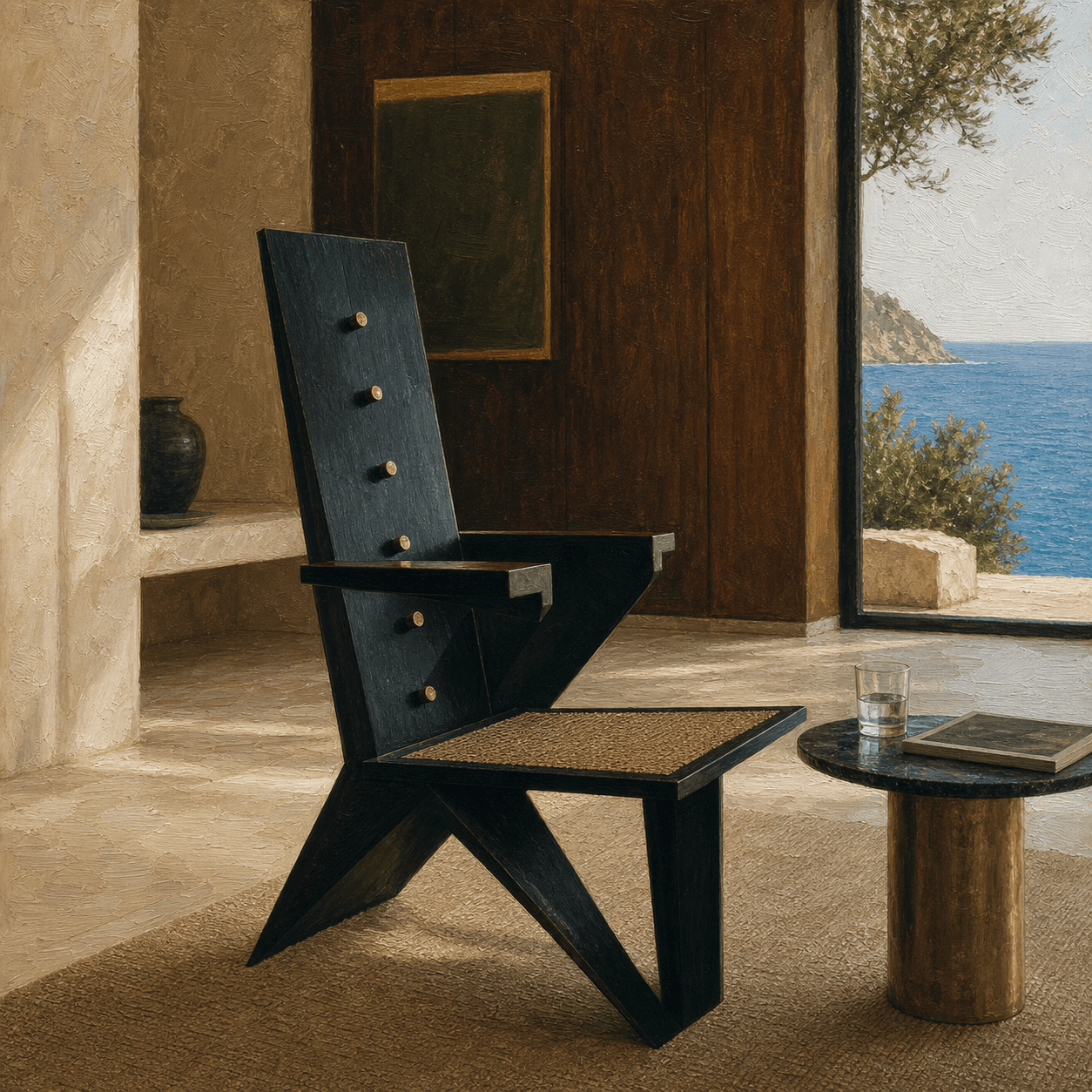
It sits alone in a corner, angled toward a view, a fireplace, or a bowl containing three pieces of fruit no one is meant to eat. It has the posture of an object that has been interviewed by a museum. The back is too vertical. The arms are too severe. The seat is either suspiciously low or high enough to imply a small judgment about your hamstrings.
It is not there to hold you.
It is there to hold the room together.
The Chair That Does Not Beg
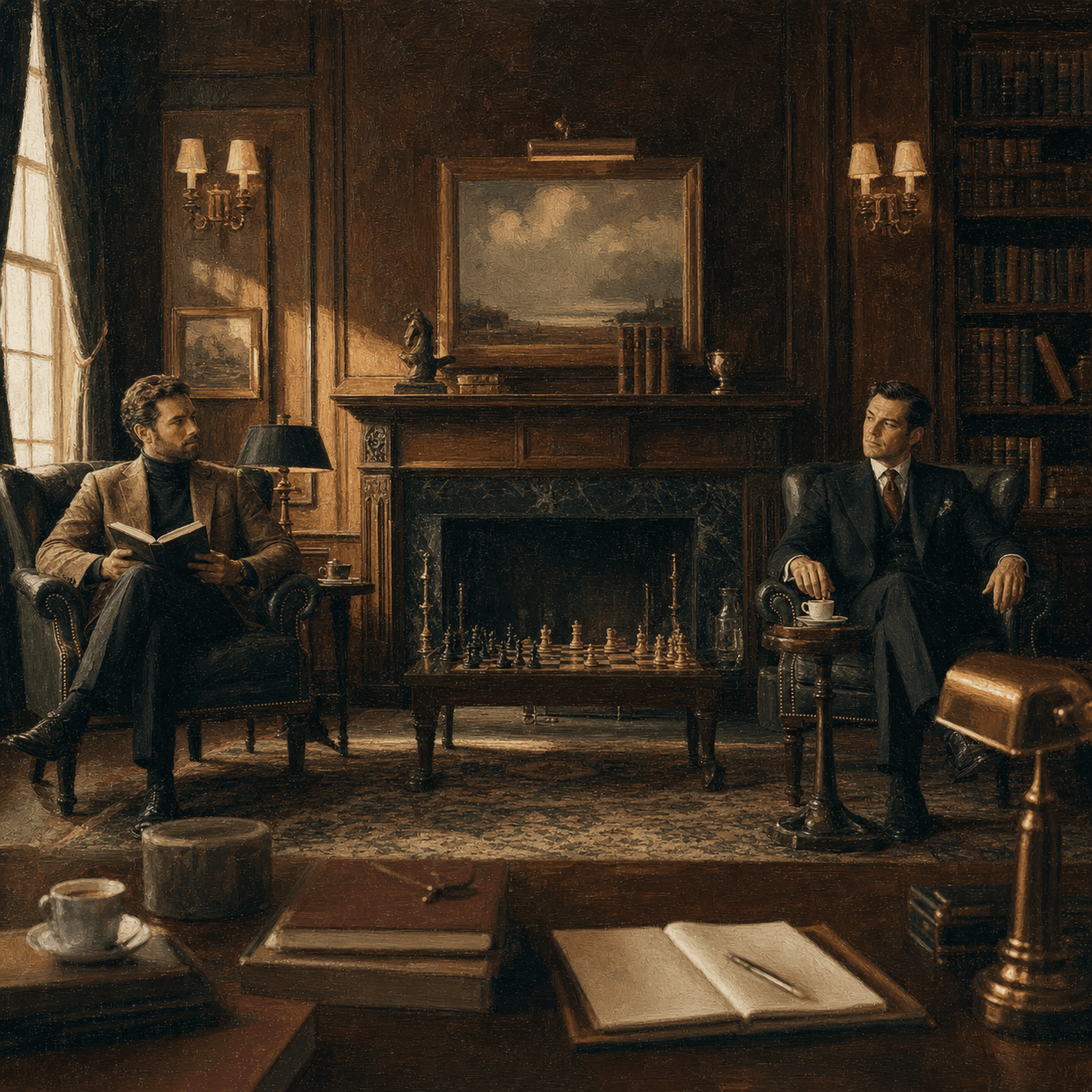
Comfortable chairs have an obvious morality. They receive. They soften. They let the body collapse into a state of household democracy. A good club chair says, "You have been through enough. Sit."
The difficult chair says something else.
It says, "Prove you understand why I am here."
This is the new status code. Not comfort, exactly, but discernment. The owner is not simply furnishing a room. They are placing a small manifesto in it. The difficult chair announces that the room has graduated from utility into composition. It is less furniture than punctuation.
A sofa is hospitality. A sculptural chair is editorial control.
Modernism Was Never Entirely Cozy
This is not a new impulse. Modern design has always had a complicated relationship with the body. It promised clarity, function, and new ways of living, but it also loved the clean authority of objects that looked as if they had solved an equation at your expense.
Gerrit Rietveld's 1934 Zig-Zag Chair, held in MoMA's collection, is a perfect ancestor: four planes of wood arranged into a chair with the apparent structural confidence of a lightning bolt. It looks less like seating than a dare issued by geometry.
Mies van der Rohe's Barcelona Chair, designed in 1929 for the German Pavilion at the International Exposition in Barcelona, is more gracious but no less ceremonial. Knoll describes it as one of the most recognized objects of the last century, and its original context matters: it was designed for a pavilion, not a family room full of backpacks and crackers.
The chair was born as an event.
That is the important part. The difficult chair descends from furniture that was never merely furniture. It was proposition, platform, theory, occasion.
When Sitting Became a Concept
By the middle of the twentieth century, chairs had become a favorite battlefield for designers because the assignment was so simple and so impossible. A chair must meet the human body, gravity, material limits, manufacturing logic, taste, and ego. It has to be useful, but not only useful. It has to be stable, but not boring. It has to invite the person without surrendering the room.
Verner Panton understood the seduction of impossibility. Vitra's history of the Panton Chair describes a long effort to realize his plastic cantilever concept, with manufacturers rejecting the idea before Vitra eventually collaborated with him. The chair became iconic partly because it looked as if the future had briefly become liquid and then decided to support your lower back.
Frank Gehry took a different route with the 1972 Wiggle Side Chair, part of his Easy Edges series. Vitra describes how he brought a new aesthetic dimension to cardboard, turning an everyday material into a sculptural, durable, surprisingly serious chair.
This is the chair as thesis. Not "please sit." More like: "Here is a material argument that happens to tolerate a person."
Why Rooms Need One Difficult Thing
A room made entirely of comfort can become sentimental. Everything soft, low, rounded, padded, and agreeable begins to blur into one large upholstered sigh. There is nothing wrong with that, especially after a long day, but no room becomes memorable by agreeing with you at every point.
The difficult chair gives the room resistance.
It creates a visual argument. It introduces angle, silhouette, pause. It tells the eye where to land. It makes the room feel chosen rather than accumulated.
This is why decorators love one object that slightly misbehaves. A chair that looks too severe beside linen curtains. A lacquered thing against raw plaster. A ridiculous cantilever under a very serious lamp. The object does not ruin harmony. It saves harmony from becoming beige obedience.
Taste needs friction. Otherwise it becomes upholstery with a budget.
Discomfort as Status
There is also a social code hiding here.
A comfortable chair is democratic. Anyone can understand it. Sit down, feel good, exhale, become slightly less vertical. A difficult chair asks for cultural literacy before it gives up its charm. You may need to know the reference. You may need to know the material. You may need to understand that the point is not whether it is the best place to watch television.
The difficult chair is a social filter disguised as furniture.
Guests reveal themselves around it. The confident admire it and sit elsewhere. The literal ask if it is comfortable. The anxious perch on it for twelve seconds and develop a new relationship with their knees. The truly dangerous say, "I actually love this," and mean it.
The chair has done its work before anyone sits down.
The Instagram Problem
Of course, the difficult chair has become more common because the room is no longer experienced only by the people inside it. Rooms are photographed now. They are flattened, cropped, distributed, judged, saved, pinned, and quietly used by strangers as evidence against their own coffee tables.
In a photograph, comfort is hard to prove.
Shape is easy.
A soft chair may be heaven to occupy and forgettable on camera. A sculptural chair may be moderately hostile to the pelvis and magnificent in the grid. This has changed the economics of desire. The object that photographs well earns its keep even when no one touches it.
We used to buy chairs for rooms. Now we also buy them for the room's afterlife.
How to Own One Without Becoming Insufferable
The rule is simple: only one difficult chair per room unless you live in a gallery, a concept hotel, or a state of advanced emotional denial.
The difficult chair needs contrast. Give it a forgiving sofa nearby. Give it a rug that does not look like a spreadsheet. Give it a side table with a real drink on it, not an object selected because it has the correct matte finish. Let the room remain human.
Most importantly, do not explain the chair too quickly.
If someone asks, "Is it comfortable?" resist the temptation to perform a small lecture about postwar material experimentation. Say, "Not really," and smile.
That is taste with manners.
The Final Seat
The return of the difficult chair is not really about discomfort.
It is about a hunger for objects with nerve.
In a culture drowning in convenience, there is glamour in the thing that refuses to become frictionless. The chair that will not disappear into softness. The chair that makes the room stand up straighter. The chair that says living beautifully may require, every now and then, sitting with intention.
Comfort is lovely.
Ease is useful.
But a room needs one object with a spine.
The difficult chair is not asking you to relax.
It is asking whether you understand the room.
Sources
This essay draws on collection and manufacturer histories of modernist and sculptural chair design.