Highest Fade
The Room That Does Not Want Anything From You
There is a kind of room that modern life no longer knows how to enter.
Not a bedroom. Not an office. Not a "wellness space" with a diffuser working overtime and a small ceramic bowl full of stones no one is brave enough to question.
I mean a room built for nothing.
A chair. A window. A table with a book on it, perhaps, though even the book understands it is optional. No television performing its little neurological tap dance. No phone glowing nearby like a tiny emergency chapel. No laptop. No podcast explaining how silence can 7x your focus if you pair it with electrolytes and a cold plunge.
Just a room.
And in the room, a person sitting.
Not meditating in the marketed sense. Not biohacking. Not trying to become visually employable as a calm person. Simply sitting there, awake and unentertained, with the faintly aristocratic confidence of someone who believes the soul can be trusted with ten unsupervised minutes.
This used to be ordinary.
Now it feels almost illicit.
Silence Used to Be Built Into the Day
For most of history, silence was not a lifestyle choice. It was atmospheric. It arrived between things. Between letters. Between bells. Between visitors. Between weather and work and the long dark after dinner.
A medieval monastery had its hours. A country house had its morning room. A library had its hush. Even the old railway carriage, before everything became a personal broadcast studio, allowed a person to stare out the window and become mildly philosophical about a field.
These forms of quiet were not always romantic. Silence could mean loneliness, class privilege, boredom, exclusion, grief. Let us not become sentimental and start pretending every candlelit room was a chapel of mental health.
But the old world did understand something we have almost optimized out of existence:
A mind needs intervals.
Not content. Not prompts. Not constant emotional weather from everyone you have ever met, admired, disliked, almost dated, or accidentally followed during a weak hour.
Intervals.
Small, undecorated spaces where thought can stop sprinting and begin arranging itself.
The New Noise Is Not Loud
The strange thing about modern noise is that much of it is silent.
Your phone makes no sound and still interrupts you. A tab sits open and still occupies a little office in your brain. A message you have not answered can hum louder than a leaf blower. The device does not need to ring anymore. It has trained you to ring for it.
This is why people can live in physically quiet apartments and still feel as if they are being chased through a casino.
The room is quiet.
The mind is not.
Somewhere inside the skull, a committee is reviewing obligations. A part of you is remembering a comment from 2018. Another part is wondering whether your friend is mad because she used a period. Another is comparing your life to a person in linen who appears to own both tomatoes and free time.
None of this is dramatic enough to count as crisis.
That is how it gets you.
The Old Luxury Was Ornament. The New Luxury Is Absence.
Luxury used to announce itself.
Velvet. Silver. carved wood. A hotel lobby with enough floral arrangement to imply diplomatic immunity. A watch heavy enough to suggest the owner had defeated several generations of anxiety and converted them into metal.
Those things still have their charm. I am not made of rope and discipline. Give me the good glassware. Give me the absurd chair. Give me the expensive candle that smells like an old library having a private thought.
But the more interesting luxury now is subtraction.
A room without alerts.
A meal without documentation.
A morning in which no one can reach you and nothing tries to become a notification before you have formed a self.
Silence has become a status symbol because attention has become the taxed commodity. The rich are not only buying better objects. Increasingly, they are buying better absences: private dining rooms, quiet cars, remote retreats, houses set back from roads, phones handed to assistants, weekends with no signal and suspiciously excellent sheets.
The rest of us can still practice the core technology.
Sit down.
Remove the little glowing defendant from the room.
Let the silence make its case.
The First Five Minutes Are Humiliating
The problem with sitting in silence is that you immediately meet yourself.
And yourself, at first, is not always an elegant companion.
Yourself wants to check the weather. Yourself remembers a tiny administrative task and presents it with the urgency of a house fire. Yourself suddenly becomes interested in dust. Yourself wonders if sitting like this is secretly pretentious, then becomes pretentious about wondering that.
This is why silence feels difficult. Not because silence is empty, but because it reveals the amount of noise you have been outsourcing to stimulation.
The first five minutes are not serenity.
They are inventory.
You see the pile. The unresolved thought. The vague dread. The hunger. The memory. The fantasy argument. The small grief wearing a practical coat. The ambition that has become irritable from lack of air.
This is where most people leave.
They call it boredom and return to the machine.
But boredom is often just the lobby of attention. Stay a little longer and something quieter begins to arrive.
The Nervous System Likes Proof
The body does not relax because you have decided, intellectually, to be a calmer sort of person.
The body is ancient and unimpressed.
It wants evidence.
No alarms. No sudden demands. No hand reaching toward the pocket every thirty seconds. No facial expression changing because a stranger posted a thing that made your chemistry rearrange itself.
Silence is evidence.
Not proof that life is safe, exactly. Life is not always safe. But proof that this moment is not asking you to perform, defend, compare, reply, optimize, or become more legible to a feed.
In that evidence, the body begins to downgrade the emergency.
The jaw unclenches. Breath lengthens. A thought finishes itself. The room returns to scale.
You remember that not every minute has to become useful to be valuable.
A Small Protocol for Doing Nothing
There is no need to become monastic about this. Please do not buy a linen tunic and start speaking in lowercase.
Try this instead:
- Choose one chair that is not your work chair.
- Put your phone in another room, face down, preferably feeling ashamed.
- Set no ambitious goal. Ten minutes is enough to begin.
- Do not call it meditation if that makes you perform calmness.
- Let your mind behave badly without immediately rewarding it with stimulation.
- Stay until the room stops feeling like an accusation.
That is the practice.
Not enlightenment. Not productivity. Not a character arc with tasteful lighting.
Just the recovery of inner margin.
The Person Who Returns
After real silence, the world sounds different.
Not permanently. Let us not get carried away. You will still become irritated by a password reset. You will still open the refrigerator with no plan and the weary confidence of a person seeking answers from dairy.
But something small changes.
You re-enter with a fraction more authorship.
A message arrives and does not immediately colonize your posture. A thought appears and does not become law. A craving knocks and you do not have to sprint to the door in formalwear.
This is the lost luxury:
Not silence as aesthetic.
Silence as sovereignty.
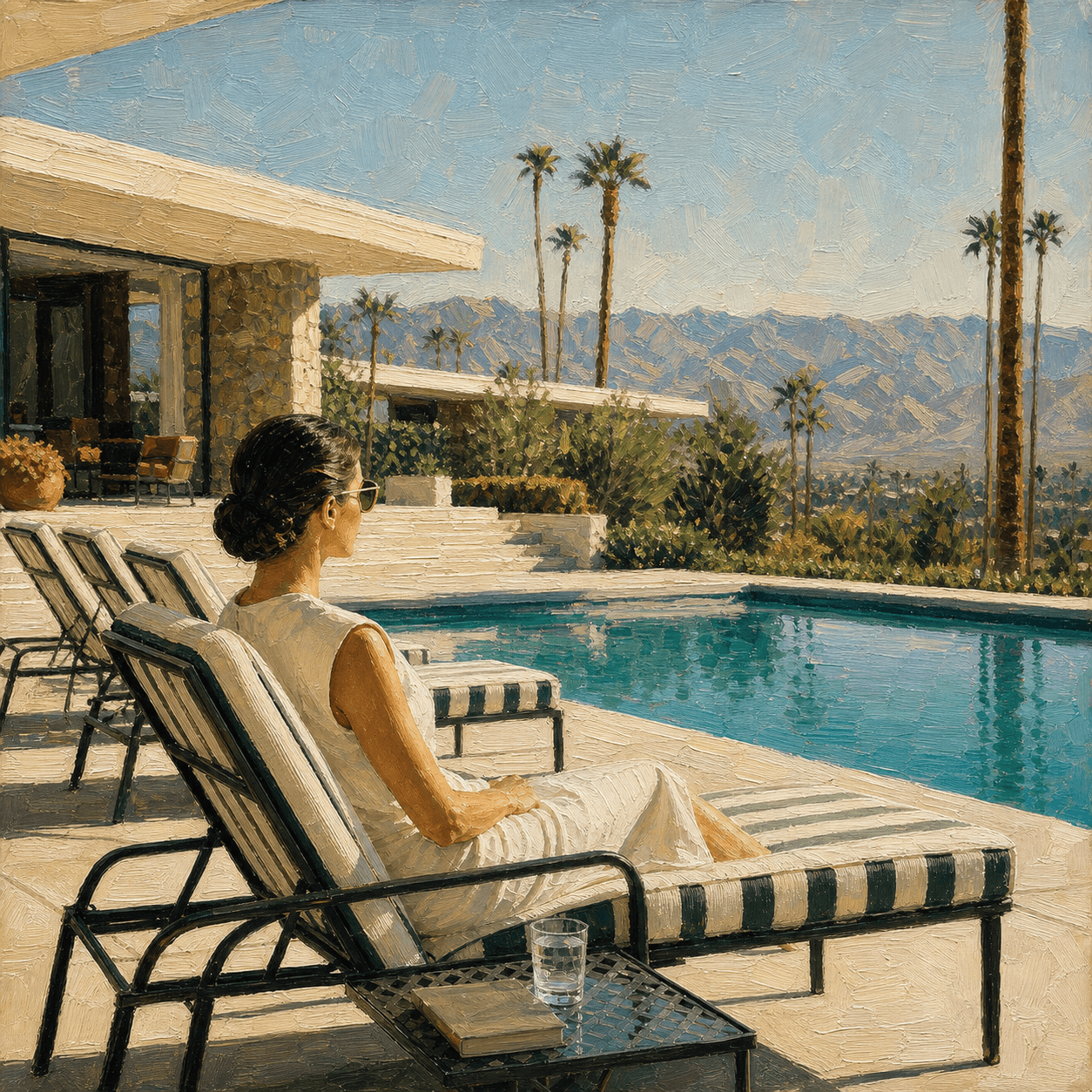
A person in a chair. A room that does not applaud. A window. A little morning light. Nothing happening, finally, and the nervous system slowly realizing it does not have to make something happen to justify being alive.
Sit there long enough and you may discover the rarest modern pleasure:
You are not behind.
You are not content.
You are not a brand, a plan, a backlog, a public-facing arrangement of preferences.
You are a person in a room.
For ten minutes, that is enough.