The fully completed life sounds admirable.
It also sounds unbearable at dinner.
There is a particular modern fantasy in which everything is handled.
Inbox zero. Laundry folded. Tasks closed. Groceries ordered. Calendar color-coded. Messages answered with the brisk moral hygiene of a person who has never once stood in the kitchen eating almonds over the sink while reconsidering a friendship.
This fantasy is not wrong. Completion has its dignity. A finished thing gives the nervous system a small bell of relief. Done. Filed. Paid. Sent. Removed from the little courtroom of attention.
But there is a difference between order and the compulsion to close every door before the air has moved.
The Tyranny of the Clean Slate
The clean slate has become a status symbol.
We admire the person who appears to move through life without residue. Their desktop is clean. Their replies are prompt. Their counters are bare. Their emotional processing seems to occur in a private cloud service with excellent uptime.
It is tempting to want this. It suggests control, clarity, adult competence, and perhaps some hidden Scandinavian storage system unavailable to the rest of us.
Yet the clean slate can become sterile if pursued too aggressively. A life with no open loops may be efficient, but it can also become over-managed. Nothing ferments. Nothing waits. Nothing has the chance to become stranger, deeper, or more alive because everything is resolved at the earliest available administrative moment.
Not all unfinished things are failures.
Some are invitations.
The One Thing
The key is one.
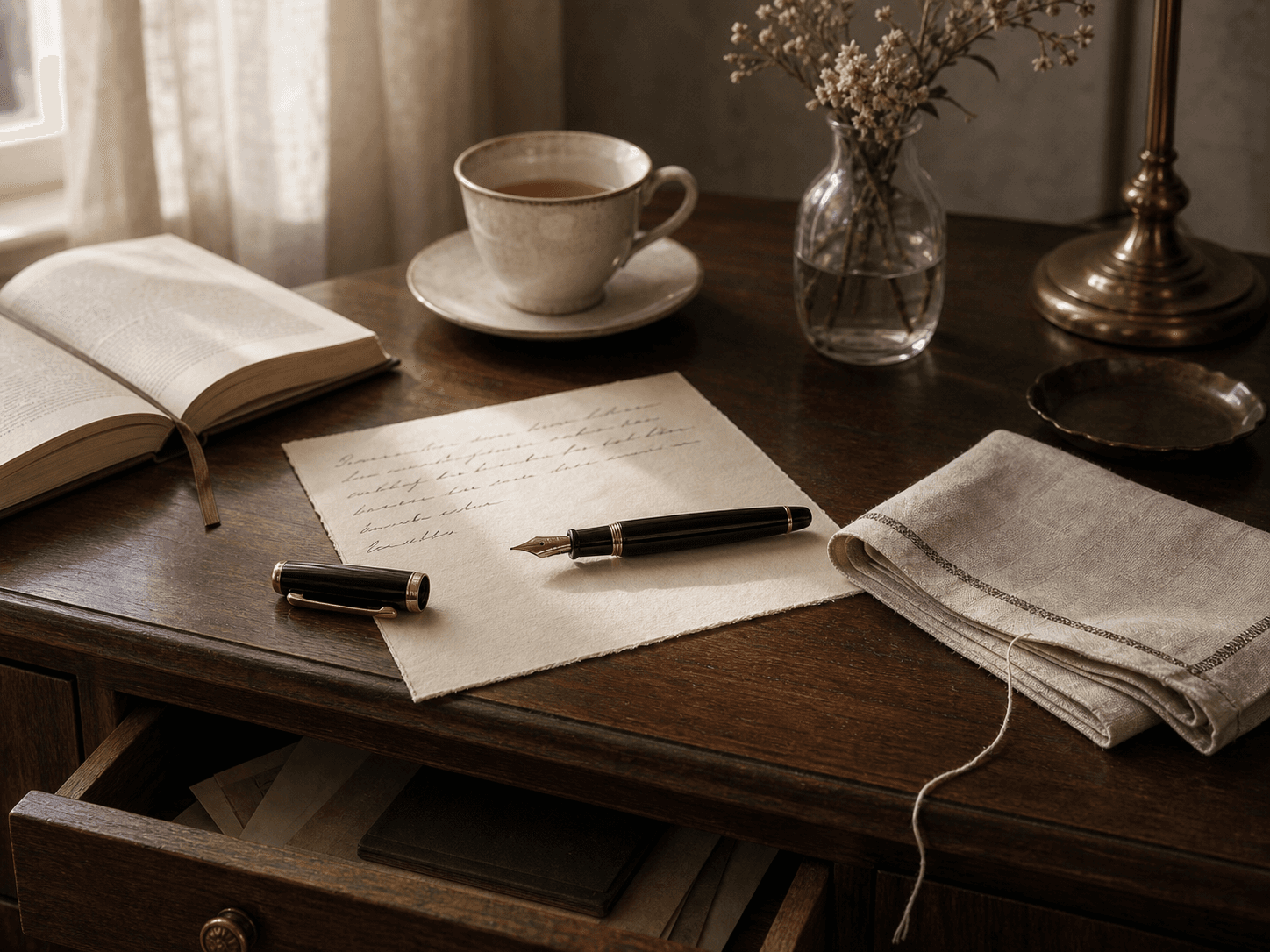
Not twelve. Twelve unfinished things is not philosophy. It is a Tuesday with weak boundaries. The art is in leaving one thing deliberately incomplete: a letter not yet sent, a book paused at the sentence that opened something, a drawer left slightly unresolved, a question allowed to remain warm overnight.
One unfinished thing can act like a small window in an otherwise sealed room. It reminds the mind that life is not only execution. It is also incubation.
The undone thing says: not yet.
Not abandoned. Not avoided. Not forgotten in the humiliating drawer where old chargers and expired loyalty cards go to practice mortality.
Simply not yet.
Why Closure Is So Seductive
Closure feels clean because the brain likes completed patterns. An unchecked task pulls on attention. A half-written message glows faintly in the mind. An unresolved conversation waits behind the day like a person clearing their throat.
This is why productivity culture has such power. It promises relief from psychic drag. Capture the task. Process the inbox. Close the loop. Move the card to done. Become briefly lighter.
There is wisdom there. Chaos is not romantic when it has invoices attached.
But closure can also become a sedative. We finish things not because they are ready, but because open-endedness makes us feel exposed. We send the message too soon. We publish the thought before it has developed a spine. We resolve the evening into a plan because ambiguity feels socially expensive.
Sometimes the urge to finish is not discipline.
It is discomfort in formalwear.
The Elegance of a Pause
A pause is not procrastination if it has a purpose.
The pause lets the first version of the self calm down. This is useful because the first version of the self is often loud, underfed, reputation-sensitive, and operating with the emotional range of a hotel thermostat.
Leave the reply until morning and the sentence may become kinder. Leave the essay unfinished and the hidden argument may appear. Leave the room slightly imperfect and you may discover that your worth was not, in fact, stored in the angle of a throw blanket.
The pause creates distance, and distance restores proportion.
This is one of the quieter forms of balance: the refusal to treat every tension as an emergency requiring immediate management.
The Creative Use of Residue
Artists have always known that unfinishedness can be productive.
A painting left overnight returns as a stranger. A paragraph abandoned midstream reveals its actual direction in the shower. A melody resists completion because the obvious ending is too obedient. The mind continues working after the hand has stopped. It rearranges, edits, softens, objects.
This is why some writers stop before they are empty. They leave a sentence unfinished so there is somewhere to return. They do not end the day by sweeping the entire field clean. They leave a small gate open.
The unfinished thing becomes a bridge between selves.
Tonight's you leaves a thread. Tomorrow's you follows it back in.
The Domestic Version
There is a domestic version of this too.
One room can remain slightly in progress. One stack of books can avoid being turned into a lifestyle statement. One drawer can be allowed to contain the miscellaneous truths of a household without immediately being converted into labeled clarity.
This is dangerous advice, obviously. Some people will hear "leave one thing unfinished" and interpret it as permission to create a second garage inside the first garage. That is not the point. The point is not surrender to entropy. The point is choosing one place where life is allowed to remain in motion.
A home that is too complete can become showroom-hostile. No evidence of a half-thought. No book face down. No cup cooling beside a chair. No trace of the human being who supposedly lives there.
Beauty needs a little evidence.
What to Finish
Some things should be finished.
Taxes. Apologies. Thank-you notes. Medical forms. The email declining something you already know you cannot attend. The load of laundry that, if neglected, will develop a political movement inside the machine.
Balance is not the aestheticization of avoidance. It is knowing the difference between a loop that drains you and a loop that keeps something alive.
Finish what creates trust. Leave open what creates depth.
This is not always easy. Many of us were trained to treat unfinishedness as accusation. The undone thing looks at us. It implies a flaw. It says we are not organized enough, not disciplined enough, not optimized enough to pass as a competent adult under modern lighting.
Let it look.
Not every look requires a response.
The Luxury of Unresolved Time
There is a reason affluent life often sells itself through unfinished-looking time.
The book left open on a terrace. The breakfast not rushed. The afternoon with no visible deliverable. The train ride where nothing is solved except the slow movement from one place to another.
We want this because most of life now asks to be processed immediately. Everything arrives with a call to action. Reply. Confirm. Track. Rate. Review. Complete your profile. Finish setup. Continue where you left off.
Against this, leaving one thing unfinished becomes a small act of private wealth.
You are saying: I have enough time to let this remain alive.
Even if you do not.
How to Practice
Choose one thing with care.
Leave a sentence unfinished in a notebook, not an apology in someone's inbox. Leave the book open, not the oven on. Leave a creative problem unresolved, not a promise. Let the open loop be generative, not negligent.
Then stop managing the feeling it creates.
Notice the itch to close it. Notice the little managerial voice in the mind reaching for a label, a plan, a folder, a conclusion. Let that voice tire itself out. It has served you well in many areas. It does not need to be chairman of every room.
Return tomorrow.
See what changed.
Finish what protects your life.
Leave open what deepens it.
Balance is knowing which is which.
One unfinished thing can be a mess.
Or it can be a window.